


Bookey: Books for Self Growth
3.728.00 Reviews
App Specs
- Version
- 5.2.5
- Updated On
- License
- Free
- Downloads
- 100,000+
- Developer
- Ideas Network
- Categories
- Books & Reference
- Platform
- Android
Screenshots


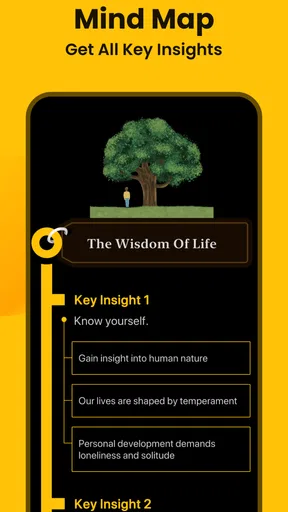
 Analysis by AppCompare
When my day is crowded, I still want to make room for ideas from books I may not have time to read cover to cover. That is the problem Bookey: Books for Self Growth is built to address: it turns books into summaries that are easier to fit into small pockets of time. I find that focus useful, as long as I treat a summary as a way to explore and revisit ideas rather than a full substitute for reading.
What a summary changes
The central appeal is not simply having reading material on a phone; it is being able to get a structured sense of a book without making a long commitment first. For someone choosing between several self-development titles, that can make exploration less of a gamble. A summary can help me decide whether a book’s approach is relevant to a problem I am dealing with, or whether I would rather move on to another subject.
Bookey is a free Books & Reference app from Ideas Network. It has a 3.7 average from around 1,700 ratings, and more than 100,000 installs. Its age rating is Everyone, and it was released on November 18, 2025. The current version is 5.2.5, with Android 5.0 as the minimum operating system. The app also offers in-app purchases, with listed items ranging from $9.99 to $199.99, so I would check the purchase details before committing to anything beyond the free experience.
What is Bookey All About?
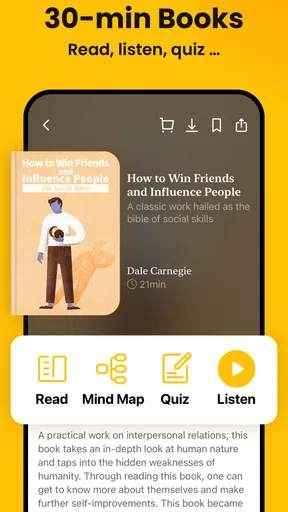
At its core, Bookey: Books for Self Growth is all about making reading more accessible and efficient. It offers detailed summaries of a wide range of books, focusing on self-improvement, productivity, psychology, and more. It’s like having a personal library in your pocket that’s always ready to give you the gist of the best books out there.
The app comes with an impressive collection of book summaries, and the best part is that these aren’t just superficial overviews. They are detailed enough to give you a comprehensive understanding of the book’s key concepts and ideas, all while you’re on the move.
A User-Friendly Experience
Now, let’s talk about the user experience. Navigating through Bookey is a breeze. The interface is clean, intuitive, and easy on the eyes. You don’t have to be tech-savvy to get the hang of it. Just open the app, and you’re greeted with a user-friendly layout that’s inviting and straightforward.
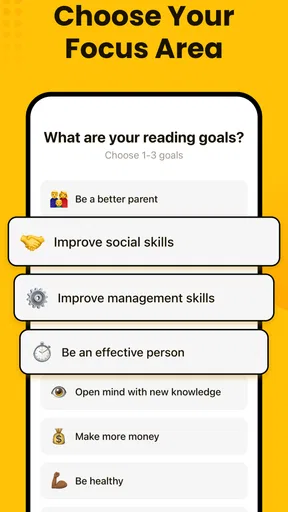
What I personally love is how you can filter the books by category, making it super easy to find your next read. Whether you’re into personal development or looking to dive into some deep psychological insights, there’s something here for everyone.
Worth Reading Before You Choose

Switching to Android Auto Means Rethinking Your Driving Routine

Google Calendar Makes a Crowded Week Easier to Manage

Baby Panda World Brings Quick Play to Modern Phones, but Its Game Library Feels Busy

ESPN’s Live Game View Makes Following Close Games Easier

QuizzLand Review: A Good Fit for Short Trivia Breaks, Not Every Player

Basketball Stars: Multiplayer Is Fast, but Can It Recover When Matches Go Wrong?
Audio Summaries for the Win
If you’re like me and sometimes prefer to listen rather than read, Bookey has got you covered with its audio summaries. This feature is a game-changer if you’re always on the go. Whether you’re commuting, working out, or just chilling at home, you can listen to the summaries and soak up knowledge without having to flip a page.
The audio quality is top-notch, and the narrators do a fantastic job of keeping you engaged. It’s like having a personal storyteller who knows exactly how to make the content come alive. Plus, the ability to adjust the playback speed is a nice touch for those who like to listen at their own pace.
Using it in an ordinary day
A practical routine is to pick one question before opening the app, such as how to plan a less chaotic week or how to understand a habit that keeps slipping. I can then browse by category, choose a summary that seems relevant, and listen during a walk or read when I have a quiet break. Having a question in mind makes the session more useful than browsing at random, because it gives me a reason to notice which ideas actually apply.
After listening, I would write down one idea in my own words and one small action to test. That step matters: a compact explanation can feel satisfying even when I have not changed anything. Returning to the note later helps me distinguish a memorable phrase from an idea I can put into practice. I would not try to collect a long queue of summaries; choosing one and giving it attention is a better fit for the app’s short-session appeal.
Where it fits beside other reading options
Compared with opening a full ebook, a Bookey summary asks for less uninterrupted time and can be a useful first look at a subject. Compared with a podcast, its focus on a particular book gives the session a clearer source and structure. But the trade-off is real: a summary necessarily compresses an author’s reasoning, examples, and qualifications. If I need to understand a difficult argument, follow a detailed method, or judge how a conclusion was reached, the original book is the better choice.
It also serves a different purpose from a library app or an ebook reader. Those are better when I want the complete text, to follow an author’s argument at my own pace, or to return to exact passages. Bookey is more suited to discovery and orientation. I would use it to decide what deserves deeper attention, not as proof that I have read every book it summarizes.
Small choices that improve the experience
Audio is especially handy when my hands are busy, but listening is not always the best way to absorb a complicated point. I would use the playback-speed control to make familiar material quicker to revisit, then slow down or switch to reading when the ideas become dense. A commute with traffic or frequent interruptions may also be a poor place for careful listening; a short, predictable walk is easier for me to focus on.
Category filters are most useful when I already have a direction, such as psychology or productivity. If I am unsure what I want, I would start with a real-life question instead of browsing broad topics indefinitely. That small change can prevent the app from becoming another feed to scroll through. The key trade-off is between breadth and depth: summaries let me sample more ideas, while a full book gives those ideas room to develop.
Who is likely to get the most from it?
I can see Bookey working well for curious readers who want an accessible introduction to self-improvement, productivity, or psychology, especially if reading time comes in short intervals. It may also suit someone who wants to compare ideas before choosing a book to buy or borrow. People who learn comfortably through audio have another convenient way to use it, while readers who prefer text can still approach the summaries as a lighter reading session.
I would skip it if my main goal were literary immersion, detailed research, or a complete account of an author’s evidence and reasoning. It is also not the right fix for a schedule that leaves no attention for learning at all: audio can use otherwise empty moments, but it still takes focus to remember and apply an idea. Anyone weighing paid options should decide what they want from the app first and review each purchase carefully; the free starting point makes it sensible to explore before spending.
A User-Friendly Experience
Now, let’s talk about the user experience. Navigating through Bookey is a breeze. The interface is clean, intuitive, and easy on the eyes. You don’t have to be tech-savvy to get the hang of it. Just open the app, and you’re greeted with a user-friendly layout that’s inviting and straightforward.
What I personally love is how you can filter the books by category, making it super easy to find your next read. Whether you’re into personal development or looking to dive into some deep psychological insights, there’s something here for everyone.
Audio Summaries for the Win
If you’re like me and sometimes prefer to listen rather than read, Bookey has got you covered with its audio summaries. This feature is a game-changer if you’re always on the go. Whether you’re commuting, working out, or just chilling at home, you can listen to the summaries and soak up knowledge without having to flip a page.
The audio quality is top-notch, and the narrators do a fantastic job of keeping you engaged. It’s like having a personal storyteller who knows exactly how to make the content come alive. Plus, the ability to adjust the playback speed is a nice touch for those who like to listen at their own pace.
Why Bookey is a Must-Have
Now, you might be wondering why you should give Bookey a try. For me, it’s the convenience factor. In today’s fast-paced world, finding time to sit down and read a book cover to cover can be challenging. Bookey fills that gap by providing succinct summaries that you can consume in a fraction of the time.
Additionally, it’s a fantastic way to explore new topics and genres without committing to a full book. You get to sample a wide array of books, which is perfect for someone who’s curious about everything but doesn’t have infinite time.
The Bottom Line
In conclusion, Bookey: Books for Self Growth is a gem for anyone looking to expand their knowledge without the time commitment of traditional reading. It’s perfect for lifelong learners who value efficiency and variety. The app is well-designed, the content is rich, and the audio feature adds a layer of convenience that’s hard to beat.
So, if you’re ready to supercharge your reading habits and unlock a world of insights, give Bookey a go. It’s like having a well-curated library at your fingertips, ready to enlighten and inspire you on your self-growth journey.
Pros
- Wide range of self-help books available.
- User-friendly interface
- easy navigation.
- Offers audio summaries for on-the-go learning.
- Regularly updated with new titles.
- Supports multiple languages.
Cons
- Requires subscription for full access.
- Limited offline access.
- Some summaries are too brief.
- No bookmarking feature.
- Occasional app crashes reported.
FAQs for Bookey: Books for Self Growth
What is Bookey: Books for Self Growth?
Bookey is an app designed to help users enhance their personal and professional development through curated book summaries. It offers insights from a wide range of non-fiction books, focusing on self-improvement, productivity, and leadership. Users can listen to or read these summaries, making it a convenient tool for busy individuals.
How does Bookey differ from other book summary apps?
Bookey stands out by providing high-quality summaries that are both concise and comprehensive. It focuses on self-growth topics, offering actionable insights. The app also supports both audio and text formats, allowing users to choose how they consume content, whether on-the-go or during dedicated learning sessions.
Is Bookey suitable for all age groups?
While Bookey primarily targets adults interested in self-improvement, its content can be beneficial for teenagers and young adults as well. The app covers a variety of topics such as leadership, communication, and productivity, which can be applicable to anyone looking to enhance their personal and professional skills.
Can I access Bookey offline?
Yes, Bookey allows users to download summaries for offline access. This feature is particularly useful for those who want to continue learning without internet connectivity, such as during travel or in areas with limited signal. Users can manage their downloads to optimize storage on their devices.
Does Bookey offer a free trial or subscription model?
Bookey typically offers a free trial period, allowing users to explore the app and its features. After the trial, users can choose from various subscription plans that best fit their needs. These plans usually include monthly or annual options, providing flexibility depending on how often users intend to use the app.


